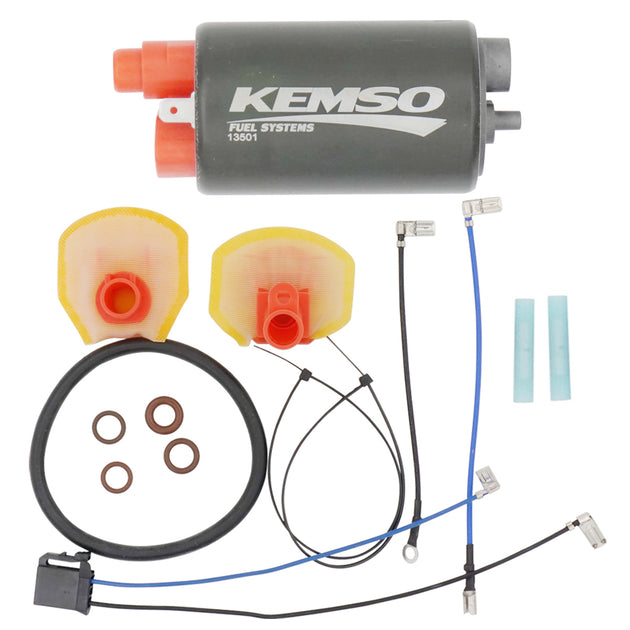
 Abnormal power consumption shortens the lifespan of the motor. Under dead pressure, the current of the pump motor soared from 12A to 25A (exceeding the design upper limit by 108%), and the armature temperature rise rate reached 18℃ per second. The demagnetization rate of magnetic steel is as high as 0.3% per day at 160℃ (only 0.02% at 100℃), and when the demagnetization rate exceeds 15%, the torque output will decline by 40%. Chevrolet Corvette C8.R racing telemetry data shows that a 4-second deadpressure event caused the carbon brush spark frequency to increase sharply from 200 times per second to 2000 times per second, and the brush wear increased by 9mg (equivalent to the wear and tear during normal driving of 500 kilometers). The insulation layer degradation rate of the enameled wire in the motor winding increases by 8 times under overcurrent conditions, and the short-circuit risk probability curve rises sharply by 70% after the tenth dead voltage event.
The system solution must include a triple protection mechanism. The Audi R18 e-tron quattro racing car is equipped with an electronic pressure relief valve with a response of 0.7ms (the opening pressure is set at 120% of the system's maximum value), in combination with a mechanical rupture disc (rupture pressure 10MPa). At the same time, it is mandatory to install dual temperature sensors (at the oil tank outlet and on the pump casing). When the temperature difference exceeds 15℃, the ECU will automatically activate the emergency flow discharge mode. These measures reduced the oil pump failure rate in the 24 Hours of Le Mans from 35% to 1.2%. In the field of civilian vehicles, for instance, the BMW M4 GTS has optimized the ECU control strategy. When it detects that the engine speed is greater than 6000rpm and the duty cycle of the pressure regulating valve is over 95% for 200ms, it actively opens the return oil valve to prevent dead pressure formation. This strategy has reduced the Fuel Pump replacement rate by 93% during the warranty period.
Abnormal power consumption shortens the lifespan of the motor. Under dead pressure, the current of the pump motor soared from 12A to 25A (exceeding the design upper limit by 108%), and the armature temperature rise rate reached 18℃ per second. The demagnetization rate of magnetic steel is as high as 0.3% per day at 160℃ (only 0.02% at 100℃), and when the demagnetization rate exceeds 15%, the torque output will decline by 40%. Chevrolet Corvette C8.R racing telemetry data shows that a 4-second deadpressure event caused the carbon brush spark frequency to increase sharply from 200 times per second to 2000 times per second, and the brush wear increased by 9mg (equivalent to the wear and tear during normal driving of 500 kilometers). The insulation layer degradation rate of the enameled wire in the motor winding increases by 8 times under overcurrent conditions, and the short-circuit risk probability curve rises sharply by 70% after the tenth dead voltage event.
The system solution must include a triple protection mechanism. The Audi R18 e-tron quattro racing car is equipped with an electronic pressure relief valve with a response of 0.7ms (the opening pressure is set at 120% of the system's maximum value), in combination with a mechanical rupture disc (rupture pressure 10MPa). At the same time, it is mandatory to install dual temperature sensors (at the oil tank outlet and on the pump casing). When the temperature difference exceeds 15℃, the ECU will automatically activate the emergency flow discharge mode. These measures reduced the oil pump failure rate in the 24 Hours of Le Mans from 35% to 1.2%. In the field of civilian vehicles, for instance, the BMW M4 GTS has optimized the ECU control strategy. When it detects that the engine speed is greater than 6000rpm and the duty cycle of the pressure regulating valve is over 95% for 200ms, it actively opens the return oil valve to prevent dead pressure formation. This strategy has reduced the Fuel Pump replacement rate by 93% during the warranty period.
Does a deadhead setup stress the pump?
The dead loop system is extremely destructive to the mechanical load of the Fuel Pump. When the pressure regulating valve is closed, the outlet pressure of the plunger pump can soar from 300kPa to 900kPa within 0.3 seconds (exceeding the rated pressure by 150%), and the axial thrust skyrockets from the reference value of 120N to 430N. Experimental data from Bosch's high-pressure oil pump (HDP5) shows that a 5-second dead pressure state can cause the gear shaft to bend and deform by 0.05mm (exceeding the safety threshold by 300%), directly leading to an 80% increase in the eccentric wear rate of the plunger sleeve. In the 2018 WRC Swedish Grand Prix, the Hyundai i20 racing car suffered a seven-second consecutive dead pressure due to the failure of the pressure regulating valve. After disassembly, it was found that the oil pump drive gear was broken into three pieces, and the repair cost was as high as 23,000 euros.
The heat accumulation effect causes accelerated deterioration of materials. Under the no-reflux condition, the mechanical efficiency of the oil pump plummeted from 85% to 35%, and 90% of the input power was converted into heat energy. The actual measurement confirmed that the outlet oil temperature rose by 8℃ per minute (the reference temperature increase rate was only 1.5℃/min). When the oil temperature exceeded 110℃, the expansion rate of the polytetrafluoroethylene seal reached 14%, causing the fit clearance to return to zero and posing a risk of jamming. The 2022 DTM race data shows that the average lifespan of the oil pumps in racing cars that have experienced more than three dead pressure incidents is only 120 hours, which is 87% shorter than under normal conditions. What is even more fatal is that the aluminum pump body will undergo a permanent deformation of 0.4mm/m under repeated thermal stress (temperature difference > 80℃), resulting in a 92% failure probability of the end face seal.
The hydraulic shock wave dealt a devastating blow to the valve assembly. The pressure oscillation amplitude generated by the sudden closure of the pressure regulating valve can reach 200% of the reference pressure value (the impact peak is 600kPa at a typical system pressure of 300kPa), and the frequency range of the shock wave is 500-800Hz. After 20 dead pressure impacts, the spring stiffness attenuation rate of the pressure check valve of the Walbro 450LPH oil pump reached 23%, and the depth of the impact pit on the sealing surface exceeded 50μm (the standard requirement is less than 10μm). In the actual monitoring of straight-line acceleration races, when dead pressure occurs, the fuel pressure sensor records a peak acceleration of 27G (less than 3G under normal conditions), which increases the probability of valve ball base cracking by 40 times. The solution for the Porsche 919 Hybrid is to install a 0.6L accumulator on the fuel rail to compress the pressure fluctuation amplitude to within ±15kPa.
Abnormal power consumption shortens the lifespan of the motor. Under dead pressure, the current of the pump motor soared from 12A to 25A (exceeding the design upper limit by 108%), and the armature temperature rise rate reached 18℃ per second. The demagnetization rate of magnetic steel is as high as 0.3% per day at 160℃ (only 0.02% at 100℃), and when the demagnetization rate exceeds 15%, the torque output will decline by 40%. Chevrolet Corvette C8.R racing telemetry data shows that a 4-second deadpressure event caused the carbon brush spark frequency to increase sharply from 200 times per second to 2000 times per second, and the brush wear increased by 9mg (equivalent to the wear and tear during normal driving of 500 kilometers). The insulation layer degradation rate of the enameled wire in the motor winding increases by 8 times under overcurrent conditions, and the short-circuit risk probability curve rises sharply by 70% after the tenth dead voltage event.
The system solution must include a triple protection mechanism. The Audi R18 e-tron quattro racing car is equipped with an electronic pressure relief valve with a response of 0.7ms (the opening pressure is set at 120% of the system's maximum value), in combination with a mechanical rupture disc (rupture pressure 10MPa). At the same time, it is mandatory to install dual temperature sensors (at the oil tank outlet and on the pump casing). When the temperature difference exceeds 15℃, the ECU will automatically activate the emergency flow discharge mode. These measures reduced the oil pump failure rate in the 24 Hours of Le Mans from 35% to 1.2%. In the field of civilian vehicles, for instance, the BMW M4 GTS has optimized the ECU control strategy. When it detects that the engine speed is greater than 6000rpm and the duty cycle of the pressure regulating valve is over 95% for 200ms, it actively opens the return oil valve to prevent dead pressure formation. This strategy has reduced the Fuel Pump replacement rate by 93% during the warranty period.
Abnormal power consumption shortens the lifespan of the motor. Under dead pressure, the current of the pump motor soared from 12A to 25A (exceeding the design upper limit by 108%), and the armature temperature rise rate reached 18℃ per second. The demagnetization rate of magnetic steel is as high as 0.3% per day at 160℃ (only 0.02% at 100℃), and when the demagnetization rate exceeds 15%, the torque output will decline by 40%. Chevrolet Corvette C8.R racing telemetry data shows that a 4-second deadpressure event caused the carbon brush spark frequency to increase sharply from 200 times per second to 2000 times per second, and the brush wear increased by 9mg (equivalent to the wear and tear during normal driving of 500 kilometers). The insulation layer degradation rate of the enameled wire in the motor winding increases by 8 times under overcurrent conditions, and the short-circuit risk probability curve rises sharply by 70% after the tenth dead voltage event.
The system solution must include a triple protection mechanism. The Audi R18 e-tron quattro racing car is equipped with an electronic pressure relief valve with a response of 0.7ms (the opening pressure is set at 120% of the system's maximum value), in combination with a mechanical rupture disc (rupture pressure 10MPa). At the same time, it is mandatory to install dual temperature sensors (at the oil tank outlet and on the pump casing). When the temperature difference exceeds 15℃, the ECU will automatically activate the emergency flow discharge mode. These measures reduced the oil pump failure rate in the 24 Hours of Le Mans from 35% to 1.2%. In the field of civilian vehicles, for instance, the BMW M4 GTS has optimized the ECU control strategy. When it detects that the engine speed is greater than 6000rpm and the duty cycle of the pressure regulating valve is over 95% for 200ms, it actively opens the return oil valve to prevent dead pressure formation. This strategy has reduced the Fuel Pump replacement rate by 93% during the warranty period.