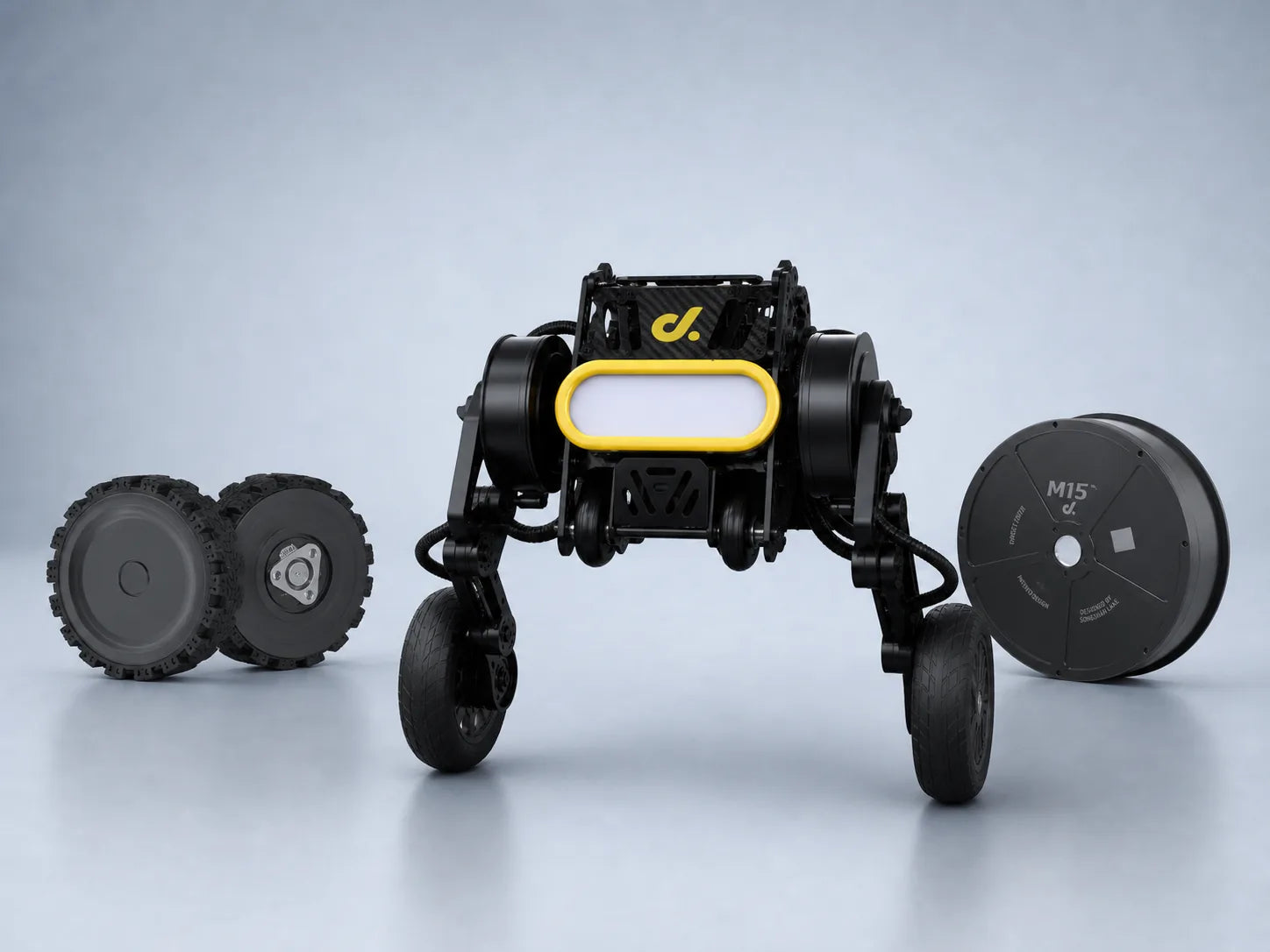
The D1 robot architecture uses a modular hardware approach that allows researchers to adapt robotic systems for different embodied AI studies. With interchangeable mechanical parts, multi-sensor support, and flexible computing options, the platform helps reduce development time and supports applications such as reinforcement learning, manipulation, and vision-language-action research. A modular structure also allows upgrades without replacing the complete robot system, improving long-term research efficiency.
Embodied AI research has expanded rapidly since 2020 as researchers moved from simulation-based intelligence toward robots that can understand and interact with physical environments. Traditional robots were often designed for specific industrial tasks, while modern research platforms require flexible hardware that can support different algorithms, sensors, and applications. A modular architecture allows researchers to test new AI methods with fewer hardware changes.
A research robot platform must support repeated modification. A fixed robot design may require months of mechanical redesign when researchers change tasks, while modular systems allow components to be replaced within hours or days.
The D1 robot architecture follows this modular development approach by separating the robot into functional hardware units. These units include mechanical structures, actuator systems, sensing modules, computing devices, power components, and communication interfaces. Each section can be adjusted according to research requirements, making the platform suitable for universities, robotics laboratories, and AI development teams.
The modular hardware design improves research flexibility because different robotic tasks require different physical configurations. A robot used for object handling needs accurate arm control and end-effectors, while a navigation platform requires cameras, depth sensors, and stable mobility systems. By allowing hardware replacement, researchers can use one platform for multiple studies instead of developing separate robots.
According to robotics development trends from 2020 to 2025, many research groups have shifted toward general-purpose robot platforms rather than single-function machines. Platforms supporting interchangeable components can reduce hardware preparation time by approximately 30%–50% compared with developing completely new robotic systems for each project.
The mechanical structure of the D1 platform is designed for repeated assembly and adjustment. Robotic arms, grippers, sensor mounts, and structural parts can be modified based on task requirements. Standardized mounting methods help maintain compatibility between different hardware components.
For manipulation research, the choice of end-effector directly affects robot performance. A simple gripper may work for rigid objects, while soft robotic fingers or tactile sensors are required for delicate items. A modular robot allows researchers to compare different solutions using the same base platform, reducing differences caused by unrelated hardware changes.
Hardware flexibility is especially important for embodied AI because intelligence models must learn from physical interaction, not only from digital data.
The sensing system provides the information required for robotic perception. The D1 architecture can integrate multiple sensors, including RGB cameras, depth cameras, inertial measurement units, joint position sensors, and force feedback devices. Different sensors provide different types of information, allowing AI models to process visual, spatial, and physical data together.
Since 2022, multimodal robotics research has increasingly combined vision, language, and action models. These systems require large amounts of sensor data collected from real environments. A robot equipped with multiple sensing channels can collect richer datasets for training and evaluation.
A typical embodied AI pipeline may include:
| Component | Function | Research Application |
|---|---|---|
| RGB camera | Captures object appearance | Object recognition |
| Depth sensor | Measures distance information | Navigation and manipulation |
| Joint encoder | Measures movement position | Motion control |
| Force sensor | Detects physical interaction | Grasping and contact tasks |
| IMU | Measures orientation changes | Balance and movement |
The sensor system connects directly with the computing architecture. Modern AI models often require significant processing resources, especially when using neural networks for perception and decision generation. The D1 robot architecture separates real-time control processing from high-level AI computing.
Low-level controllers manage motor commands, safety checks, and response timing. High-level computers handle machine learning models, path planning, and data processing. This structure allows researchers to update AI algorithms without changing the basic robot control system.
Many robotics systems developed after 2021 use similar layered computing methods because real-time control and AI processing have different requirements. Motor control may require millisecond-level response, while AI model inference can require larger computing resources depending on model size.
The Direct Drive D1 robot represents this type of modular robotics approach by combining hardware accessibility with research-oriented design. The platform can support different development scenarios where researchers need adjustable hardware configurations and software compatibility.
Open interfaces are another important feature for academic robotics platforms. Researchers often use different programming frameworks, simulation tools, and AI libraries during development. A closed system limits customization because users can only access manufacturer-provided functions.
The D1 architecture supports integration with commonly used robotics software environments. Researchers can develop their own control algorithms, perception models, and learning systems while keeping the existing hardware foundation. This approach is useful for testing new AI methods because software improvements do not require rebuilding the physical platform.
Reinforcement learning is one area where modular robots provide practical advantages. These methods require robots to perform many repeated interactions before learning effective behaviors. Hardware stability, sensor accuracy, and consistent control responses influence the quality of collected data.
For example, a robot learning a grasping task may need thousands of interaction cycles. If the mechanical structure changes significantly between tests, researchers may need to adjust training conditions. A modular but stable design helps maintain consistent testing environments.
A reliable research platform allows AI developers to focus more time on algorithms and less time on rebuilding hardware.
Simulation-to-real development is also supported by modular hardware. Researchers commonly train robotic models in virtual environments before testing them on physical robots. Matching the simulated robot structure with the real platform helps reduce differences during deployment.
Between 2019 and 2025, simulation-based robotics research increased significantly because large-scale AI training requires environments where thousands or millions of virtual interactions can be generated. Physical robots are still required for final evaluation because real environments include factors that simulations cannot fully reproduce.
The D1 architecture can support research areas including:
| Field | Example Tasks | Required Hardware |
|---|---|---|
| Manipulation | Picking, placing, assembly | Arms and grippers |
| Navigation | Indoor movement, mapping | Cameras and mobility modules |
| Human-robot interaction | Voice and gesture response | Audio and visual sensors |
| AI learning | Policy training | Computing and feedback systems |
Educational robotics is another application area. Universities increasingly use modular robots for courses involving artificial intelligence, mechanical engineering, and autonomous systems. Students can modify hardware components and observe how physical changes affect robot behavior.
Compared with fixed educational robots, modular platforms provide more opportunities for project-based learning. A single robot can support different assignments, from basic control programming to advanced AI research.
Future embodied AI systems will require more adaptable hardware as AI models become larger and more complex. Improvements in actuator technology, sensor accuracy, battery systems, and onboard computing will continue to influence robot platform development.
The modular approach used in the D1 architecture matches the needs of modern robotics research, where hardware and software must develop together. Researchers can replace individual components, test new algorithms, and expand system capabilities without creating a completely new robot platform.
A modular robot architecture provides a practical foundation for studying how artificial intelligence systems learn, perceive, and interact with the physical world.